
Tamarindo & Playa Langosta
Tamarindo is the most mature and liquid vacation rental market in Costa Rica. With 1,778 active Airbnb listings, an average daily rate of $418, and 55.3% year-round occupancy, it consistently ranks in the top 5 across every performance metric.
The town has critical mass — international restaurants, a walkable town center, excellent surf, and a well-developed tourism infrastructure. Liberia Airport (LIR) is 60 minutes away with direct flights from major US cities. The Playa Langosta extension to the south offers a quieter, more upscale alternative with equally strong rental demand.
Entry point: 2BR condos from $280K–$450K. Luxury villas $500K–$2M+.
Average property value: $620,000 (higher than national average, reflecting maturity and demand)
Why invest here: Deepest demand pool, most management options, highest liquidity for exit. The established market means lower risk but also higher entry prices.
Watch out for: Increasing supply. New construction is adding units, which could pressure occupancy in the mid-tier. Differentiation through quality, location (walk-to-beach), and management is essential.

Nosara
Nosara is Costa Rica's highest ADR market at $460/night — nearly double the national average. The 787 active listings serve a affluent, health-conscious demographic drawn to yoga, surfing, and wellness culture. Occupancy runs 56.3% year-round.
The town's restrictive zoning and limited buildable land have created a supply constraint that supports high prices but limits inventory growth. Average property values are $1.27 million — the highest of any beach market in Costa Rica. This is a premium play for investors comfortable with higher capital outlay.
Entry point: 2BR condos from $350K–$600K. Homes $600K–$2M+.
Growth signal: Listing inventory grew 20%+ in 2024, but occupancy dipped 12% in early 2025 — a sign that supply may be catching up to demand. Watch this metric closely.
Why invest here: Highest ADRs, strong brand identity, wealthy guest demographic, limited land supply supports long-term appreciation.
Watch out for: Access — Nosara is still a rough 2.5-hour drive from Liberia, limiting impulse visitors. The road is being improved but isn't there yet. Over-indexing on yoga/wellness creates concentration risk if that trend shifts.
Manuel Antonio
Manuel Antonio has the highest occupancy rate of any major market in Costa Rica at 56.3% — driven by the country's most-visited national park (1M+ visitors annually). The combination of wildlife, beaches, and rainforest creates year-round demand that's less dependent on any single tourist segment.
The market skews toward mid-range to luxury, with ADRs in the $300–$500 range for well-positioned properties. The hillside geography means many properties offer ocean views, which commands a significant premium. Los Altos resort condos are among the top-performing vacation rentals in the country.
Entry point: 2BR condos from $250K–$400K. Ocean-view villas $450K–$1.5M.
Why invest here: Consistent year-round demand driven by the national park. Less seasonal variation than Guanacaste markets. Diverse international guest base (US, European, domestic Costa Rican).
Watch out for: 3+ hour drive from San José, no nearby international airport. Road infrastructure has improved but is still developing. Humid climate means higher maintenance costs than the drier Guanacaste coast.
Peninsula Papagayo & Gulf of Papagayo
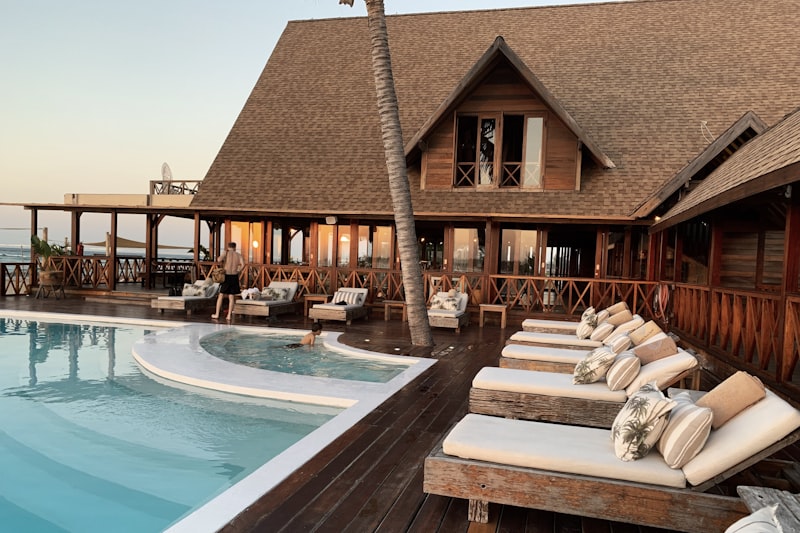
Papagayo is Costa Rica's highest-end hospitality market — home to Four Seasons, Andaz, and Planet Hollywood resorts, plus exclusive residential communities. This is where Central American wealth and international ultra-high-net-worth individuals intersect.
The investment thesis here is different: you're buying into a curated, master-planned community with resort-level amenities, marina access, golf, and a built-in management infrastructure. Entry prices reflect the positioning — $500K for a condo, $1M–$5M+ for a residence. But the ADRs and occupancy support it: premium properties command $600–$2,000+/night.
Entry point: Condos from $500K. Residences $1M–$5M+.
Why invest here: Institutional-quality infrastructure, brand-name hotel management, ultra-premium positioning, marina and golf amenities. 20 minutes from Liberia Airport.
Watch out for: Very high entry point. HOA and resort fees can be substantial ($500–$2,000/month). Less flexible — you're buying into a specific ecosystem.
Flamingo, Potrero & Brasilito
The Flamingo corridor represents one of the most interesting value plays on the Guanacaste coast. Located 30 minutes south of Liberia Airport, the area has a marina (the only full-service marina on Costa Rica's Pacific coast), beautiful white-sand beaches, and significantly lower entry prices than Tamarindo or Nosara.
The market saw a 6.8% ADR decline in early 2025, suggesting it's in a consolidation phase after rapid pandemic-era growth. For investors with a 3–5 year horizon, this could represent a buying opportunity. New development projects and the marina expansion are catalysts for future appreciation.
Entry point: 2BR condos from $200K–$350K. Beachfront homes $400K–$1.2M.
Why invest here: Lower entry prices, closest beach market to Liberia Airport, marina as a unique differentiator, less competition than Tamarindo. Good for investors who want to buy the dip.
Watch out for: Less established vacation rental infrastructure. Fewer management options. Town services and nightlife are more limited — it's quieter, which is a feature or a bug depending on your target guest.
Santa Teresa & Mal País
The bohemian surf town that's quietly become one of the most valuable real estate markets in Central America — with average sales reaching $897,000 in 2025.
📈 The Case For
Santa Teresa has evolved from a backpacker surf spot to a premium destination attracting wealthy digital nomads, international celebrities, and wellness travelers. Strong appreciation (prices have doubled in many areas over 5 years), high ADRs, and a fiercely loyal repeat-guest base. The remoteness is part of the brand — it filters out casual tourists and creates exclusivity.
⚠️ The Challenges
Access is the biggest issue — 5+ hours from San José or a domestic flight plus taxi. Water supply is limited and a political issue. The road is unpaved in sections. Infrastructure hasn't kept up with development. Management options are fewer than in established markets. This is a higher-risk, higher-reward play that rewards patient capital and local knowledge.
Entry point: 2BR from $350K–$600K. Beachfront lots from $300K+. Average sale price $897K (2025).
Emerging Markets to Watch
For investors willing to accept more risk for potentially outsized returns, these markets are earlier in their growth curves.
🏖️ Playa Grande & Las Baulas
Just across the estuary from Tamarindo, Playa Grande benefits from national park protection (limiting overdevelopment) and world-class surf. Still relatively undeveloped with lower entry prices than Tamarindo. As Tamarindo grows, Grande absorbs spillover demand. The Catalinas/Tempate region charges $488 ADR with 50% occupancy.
🌋 La Fortuna / Arenal
The country's adventure tourism capital with 51.7% occupancy. ADRs are lower ($124) than beach markets, but property prices are significantly lower too, creating attractive yield ratios. Limited new supply (only 78 new Airbnbs added in 2023–2024) suggests demand is absorbing inventory. Higher-end product is particularly undersupplied.
🌊 Southern Nicoya Coast
Playa Junquillal, Ostional, and the stretch between Nosara and Santa Teresa represent the least-developed section of Guanacaste's Pacific coast. Raw land prices are still accessible ($80K–$250K for buildable lots). High risk, long-term play, but the trajectory of adjacent markets suggests significant upside for patient investors who buy right.
How to Choose Your Market
I want the safest bet with the most liquidity
Tamarindo/Langosta. The deepest market with the most management options, highest number of comps, and easiest exit. You'll pay a premium for safety, but you'll also sleep well at night knowing you're in the most established vacation rental market in the country.
I want the highest cash yield
Manuel Antonio or La Fortuna. Both markets have strong year-round occupancy driven by iconic attractions (national park, volcano). Property prices are lower relative to ADRs, which means your yield calculations look better — especially for smaller, well-managed units.
I want maximum appreciation potential
Santa Teresa, Southern Nicoya, or pre-construction in Papagayo. These are growth plays where you're betting on continued price appreciation. Higher risk but potentially the best total returns for investors with a 5–10 year horizon and capital they don't need back immediately.
I want a premium asset with minimal operational hassle
Papagayo Peninsula or a Tamarindo condotel. Built-in management, brand infrastructure, and curated guest experiences. You're paying for operational simplicity and institutional-quality management. The trade-off is higher entry cost and potentially lower cash-on-cash returns.
I want a value play — buy the dip
Flamingo/Potrero. Recent ADR softness in an otherwise fundamentally strong market with a marina, proximity to the airport, and lower entry prices than comparable locations. If the marina expansion and new development catalyze demand, early buyers will be well-positioned.
I want to build something from scratch
Playa Grande or Southern Nicoya. Lower land costs, natural beauty, and less competition for a builder/developer with vision and patience. These markets need more high-quality product — if you can deliver it, demand will find you. Just make sure you verify titled land, water access, and permitting before buying.
Emerging Markets: Where Smart Money Is Moving in 2026
Beyond the established beach markets, several Costa Rican locations are showing early signs of the same trajectory that Tamarindo followed 10–15 years ago. These are higher-risk, higher-reward plays that require more local knowledge and longer time horizons.
Playa Negra (Northern Guanacaste): A world-class reef break that's attracted a growing community of surfers, yogis, and remote workers. Infrastructure is improving — paved roads, fiber internet in the town center, and new boutique accommodations opening every season. Land prices are still 40–60% below Nosara and 50–70% below Tamarindo for comparable parcels. The risk: limited air access (2+ hours from LIR), no hospital within 1 hour, and seasonal road flooding. But the surf, the community, and the authenticity draw a loyal repeat-visitor demographic that's willing to deal with the logistics.
Uvita / Dominical (South Pacific): The gateway to Marino Ballena National Park and some of the most dramatic coastline in Costa Rica. This corridor has seen significant development over the past 5 years, with new condos, boutique hotels, and vacation rental inventory coming online. ADRs are lower than Guanacaste markets ($150–300 for comparable properties) but occupancy is strong year-round thanks to whale-watching season (July–November) supplementing the traditional dry-season demand. Property prices are 25–40% below Tamarindo.
La Fortuna / Arenal: Costa Rica's most-visited inland destination offers a completely different investment profile. Year-round demand driven by the Arenal Volcano, hot springs, and adventure tourism means less seasonal volatility than beach markets. Occupancy runs 55–65% annually with minimal low-season dips. Entry prices are lower ($180–350K for a quality 2–3 BR rental property) and management infrastructure is mature. The trade-off: lower ADRs ($120–250) and limited appreciation compared to coastal markets.
Market Timing: When to Buy in Costa Rica
"Is now a good time to buy?" is the question every investor asks. Here's our honest framework for thinking about market timing in Costa Rica's beach markets.
The macro case remains strong. Costa Rica tourism continues to set records (2.66M air arrivals in 2024, up 7.7% YoY). Liberia airport handles more international flights every year. Remote work has permanently expanded the pool of potential long-term renters. The US dollar remains strong against the colón. These structural tailwinds support continued price appreciation in well-located markets.
The micro picture is more nuanced. After aggressive price appreciation in 2022–2024 (some Guanacaste markets saw 30–40% gains), 2025–2026 has brought a correction in pricing expectations. Inventory is up 15–25% across most beach markets. Days on market have extended from 60–90 to 120–180 for non-premium properties. Sellers who bought at 2024 peaks and are trying to flip are finding limited buyer appetite at those prices.
What this means for buyers: Negotiating leverage has shifted. In 2023, you offered asking price or lost the deal. In 2026, 5–8% below asking is a reasonable starting point on most properties. Premium beachfront and walk-to-beach properties still move quickly at full asking, but inland condos, hillside homes, and older developments are seeing price reductions. If your investment thesis is based on 5+ year hold with rental income plus appreciation, current pricing offers a more attractive entry point than anything available in 2023–2024.
The green season discount: Beyond market cycles, there's a seasonal buying opportunity that savvy investors exploit every year. May through October is when motivated sellers list, when fewer buyers are visiting, and when agents are hungrier for deals. We've seen 8–12% price differences on identical properties listed in January vs. July, simply because high-season buyers pay a "confidence premium" while green-season buyers negotiate from a position of strength.